
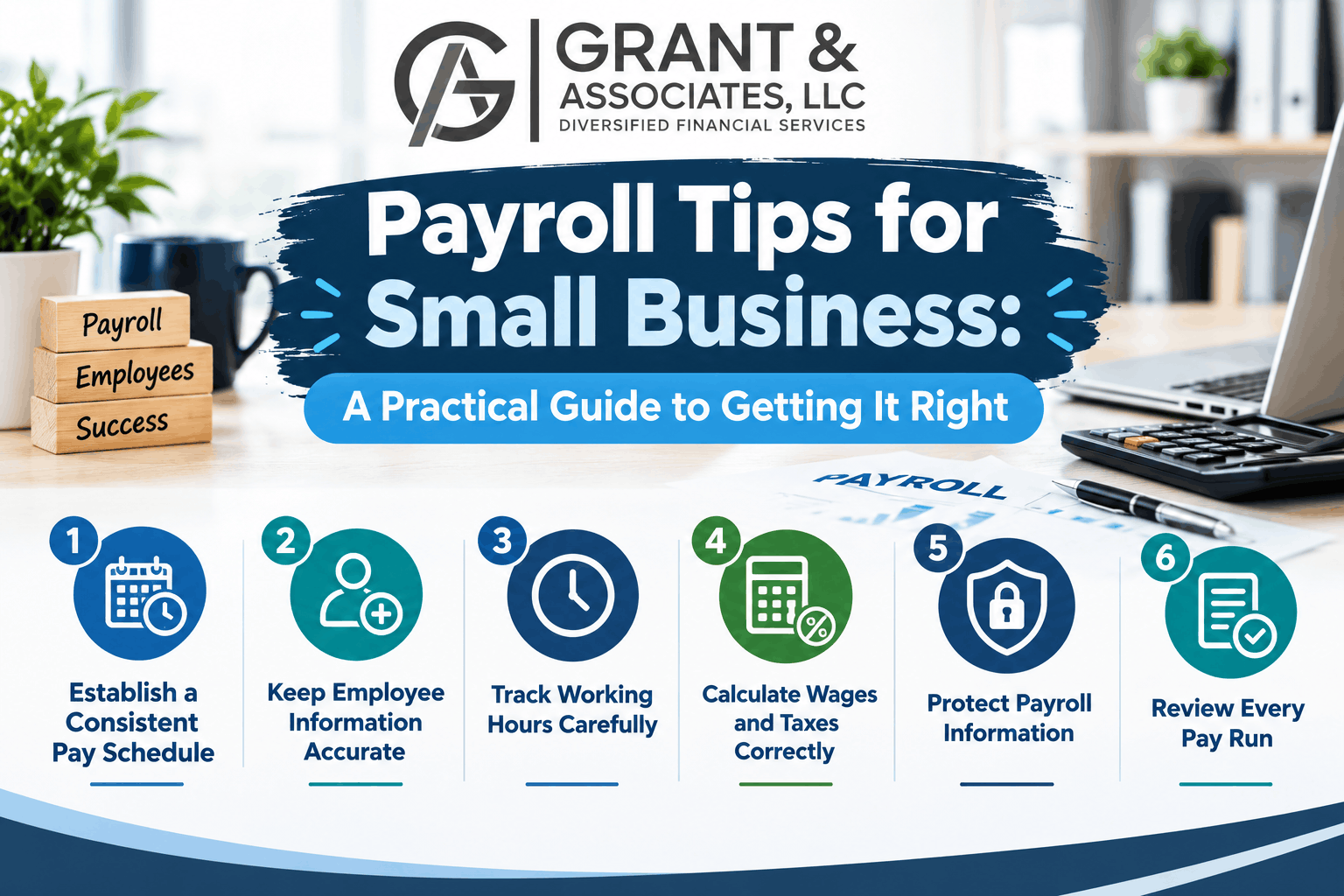
Managing employee pay can quickly become complicated as a company grows. Business owners must calculate wages, account for overtime, withhold taxes, meet filing deadlines, and maintain accurate records. Even a small error can lead to frustrated employees, unexpected expenses, or compliance issues.
A reliable payroll process helps businesses pay employees accurately and on time while reducing administrative stress. With the right systems and procedures, owners can manage their responsibilities without spending hours checking calculations or correcting avoidable errors.
This guide covers six essential practices, common pitfalls, and practical ways to make payroll easier to manage.
6 Essential Tips for Small Business Payroll
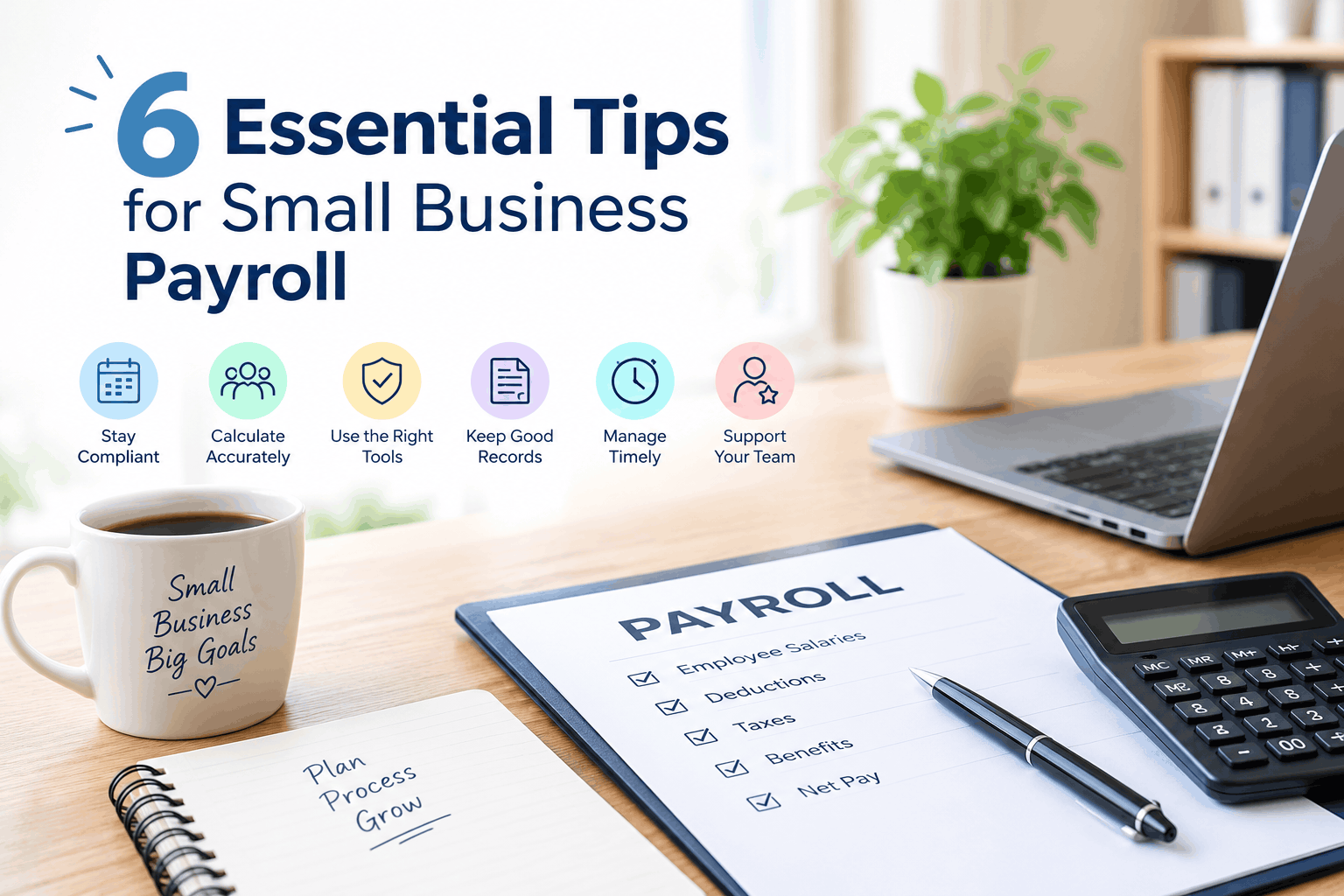
A consistent process makes small business payroll easier to manage, especially when a company has multiple employees with different pay rates, schedules, and deductions. These six practices can help establish a reliable foundation.
1. Establish a Consistent Pay Schedule
Choose a pay frequency that suits your business operations and complies with applicable state and federal requirements. Common schedules include weekly, biweekly, semimonthly, and monthly payments, although permitted frequencies vary by jurisdiction. Communicate paydays clearly so employees know when to expect their wages. Consistency also helps owners plan cash flow and prepare for upcoming payroll expenses.
2. Keep Employee Information Accurate
Collect the information needed to process payments and meet tax obligations. This may include employee identification details, tax withholding forms, bank account information for direct deposits, and current compensation agreements. Update these records whenever an employee changes their address, withholding elections, pay rate, or employment status. Accurate information prevents payment delays and unnecessary corrections.
3. Track Working Hours Carefully
Hourly employees need accurate time records to ensure they receive the correct wages. Use a dependable timekeeping system to record regular hours, overtime, paid leave, and other relevant details. Review timesheets before each pay run. Confirm unusual entries with supervisors and employees rather than making assumptions about missing or inconsistent hours.
4. Calculate Wages and Taxes Correctly
Understand how regular pay, overtime, bonuses, and other compensation affect each employee’s paycheck. Apply the appropriate tax withholding rules and account for any authorized deductions. Requirements differ depending on employee classification, location, and compensation arrangements. Consult official guidance or a qualified payroll professional when a situation falls outside your usual process.
5. Protect Payroll Information
Payroll records contain sensitive personal and financial information. Restrict access to authorized personnel, use strong passwords, enable multifactor authentication, and store documents securely. Review user permissions periodically, especially when employees change roles or leave the organization. These precautions reduce the risk of unauthorized access and payment fraud.
6. Review Every Pay Run
Before approving payments, compare payroll totals with timesheets, salary records, and previous periods. Investigate unexpected changes in gross pay, withholding amounts, or net pay. A second review can catch calculation errors before money reaches employees’ accounts. Keep a record of approvals and corrections so you can trace discrepancies later.
How to Do Payroll for Small Business
Follow these steps to process payroll accurately and consistently:
- Establish a payment schedule and collect the required employee documentation. Confirm each employee’s compensation structure, employment classification, and applicable tax withholding requirements.
- Use recorded hours or agreed salaries to determine earnings. Include overtime, commissions, bonuses, and other applicable compensation.
- Subtract required tax withholdings and authorized deductions from gross wages to determine each employee’s take-home pay.
- Check all calculations for errors before paying employees through direct deposit, checks, or another permitted method. Distribute wage statements within the applicable deadlines.
- Submit payroll tax deposits and file the required returns according to federal, state, and local deadlines.
- Compare payroll expenses against your accounting records, investigate discrepancies, and save supporting documents. Document each stage so the process remains consistent and easy to repeat.
Common Payroll Mistakes Small Businesses Make
Many payroll mistakes stem from inconsistent processes rather than complicated calculations. Recognizing these issues early can help prevent costly corrections.
- Misclassifying workers: Treating an employee as an independent contractor without meeting the applicable legal tests can create tax and wage liabilities.
Missing overtime: Failing to account for eligible overtime hours can lead to underpayment and potential penalties. - Using outdated information: Incorrect withholding elections, pay rates, or employee details can affect calculations.
- Missing deadlines: Late tax deposits, filings, or wage payments can result in penalties, interest, or employee complaints.
- Ignoring recordkeeping requirements: Missing timecards, payment records, or tax documentation makes audits and dispute resolution more difficult.
- Failing to reconcile accounts: Unidentified differences between payroll reports and accounting records can cause financial reporting errors.
Create a process for checking these areas every pay period. If you discover an error, correct it promptly, document the adjustment, and determine whether amended filings or additional payments are necessary.
How to Simplify Payroll for a Small Business
Automation can reduce repetitive data entry and improve consistency. Payroll software can calculate wages, estimate withholding, generate pay statements, process direct deposits, and help track filing deadlines. Some platforms also integrate with accounting systems and timekeeping tools.
Choose a system that matches your workforce size, pay structure, budget, and reporting needs. Before switching providers, compare pricing, customer support, tax filing capabilities, data security, and integration options. Automation still requires oversight. Review the information entered into the system, verify unusual calculations, and monitor changes to applicable regulations. Assign a responsible person to approve payroll and resolve exceptions.
If your business has complicated compensation arrangements or limited administrative capacity, working with an external provider may be more practical than managing every task internally.
Build a Reliable Payroll Checklist
A written payroll checklist helps ensure essential tasks are completed in the right order. It also creates a repeatable process when multiple people contribute to payroll administration. Before processing payments, confirm that employee details are current, timesheets have been approved, compensation changes are documented, and applicable earnings and withholding amounts are correct.
After reviewing the calculations, approve payments and confirm that employees receive their wages on schedule. Complete the required tax deposits and filings, reconcile the relevant accounts, and securely retain supporting records. Assign responsibility for each task and establish deadlines well before payment dates. Periodically review the procedure to identify delays, recurring errors, or opportunities for automation.
Maintain Payroll Compliance Throughout the Year
Payroll compliance requires more than processing accurate paychecks. Employers must understand the wage, tax, reporting, and recordkeeping rules that apply to their business and workforce. In the United States, obligations may include federal income tax withholding, Social Security and Medicare taxes, federal unemployment tax, state and local taxes, and applicable wage-and-hour requirements. Deadlines and requirements depend on the employer’s circumstances.
Stay informed through official government resources, calendar important filing dates, and review procedures whenever laws or employee circumstances change. Seek professional advice when you’re unsure how a rule applies. Also, maintain documentation supporting wages, hours worked, tax calculations, payments, and corrections. Retention periods differ by record type and governing law, so establish a schedule that meets all applicable requirements.
Understand Payroll Deductions
Payroll deductions reduce an employee’s gross earnings before or after taxes, depending on the type of deduction and applicable rules.
Common examples include required tax withholdings, employee contributions to eligible retirement plans, health insurance premiums, and certain court-ordered payments. Some deductions are mandatory, while others require employee authorization and must satisfy legal restrictions.
Calculate each deduction according to the relevant rules and verify that it appears correctly on the employee’s wage statement. Never assume that an employee’s consent makes every deduction permissible. Federal and state laws may limit deductions that reduce wages below required minimums or overtime compensation.
Document applicable authorizations, review changes to benefit elections, and reconcile withheld amounts with payments made to the appropriate agencies or benefit providers.
Make Payroll Easier to Manage
Accurate payroll depends on consistently following a few payroll tips, such as procedures, reliable records, timely payments, and regular reviews. As your business grows, investing in suitable software or professional support—like hiring payroll services—can help reduce administrative work and prevent avoidable mistakes.
Grants & Associates, LLC, can help business owners explore practical accounting and financial support for their operations. Explore our services to learn more about available support and determine which approach best fits your business.

